
Almost anything can be purchased and delivered within a day now. This is genuinely convenient. It is also, quietly, changing the weight of things.
When everything is available immediately, the act of giving no longer carries much evidence of effort. The object arrives. It is appreciated. It doesn’t say much about the time of the person who chose it, because there wasn’t much time involved. The transaction was efficient. Efficiency is not the same as presence.
I’ve been thinking about what changes when you make something for someone.
It’s not about quality. I want to be clear about that.
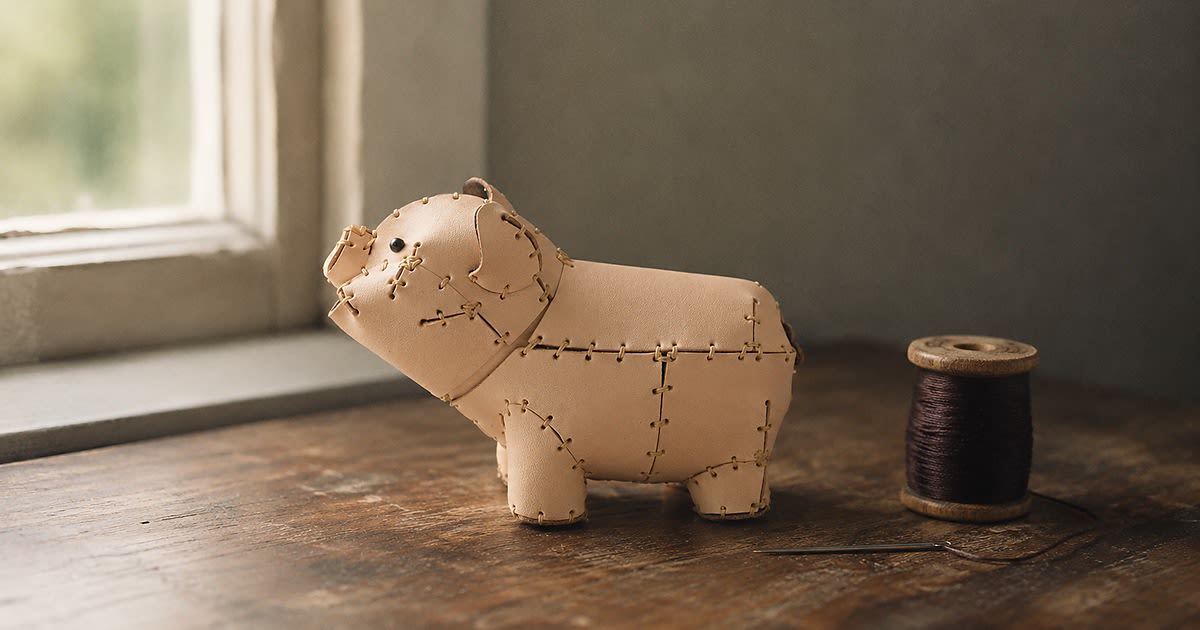
A slightly uneven stitch, a line that isn’t quite straight, a place where the leather was folded a little too much — these are not failures. They are marks. They show that a person was present during the making, that the hands moved at a human speed, that the work was not produced but made. The imperfection is the evidence.
A factory can produce a perfect object. What it cannot produce is an object that carries the irregularity of one specific pair of hands, working on one specific evening, thinking about one specific person.
That irregularity is not a flaw to be corrected. It is the content.
There is a particular quality of attention that enters the hands when you are making something for someone you know.
You think about them while you work. The color you chose with them in mind. The moment when your concentration drifted to a memory of them, then returned to the thread. The way the rhythm of the sewing held both things at once — the work, and the person you were making it for.
This is not a romantic idea. It is something that actually happens, physically, in the hands.
By the time the object is finished, it contains that time. Not as a metaphor — as a physical fact. The leather was handled during those hours. The thread was pulled through it repeatedly, by hands that were thinking of someone. Whatever the finished form holds, it holds that too.
When you give it to someone, you are not giving them the object. You are giving them the time you spent.
People used to understand this in ways that have become harder to name.
There is a long history, in many cultures, of making things for the people you care about — not because manufactured alternatives didn’t exist, but because the act of making held something that purchase could not. The repetitive labor of weaving, stitching, folding: these were ways of spending time in the direction of someone else. Of saying, without saying: I was here, thinking of you, for these hours.
The finished thing was the record. The making was the meaning.
I don’t think that understanding has disappeared. I think it has become harder to practice. There are fewer occasions that call for it, fewer materials that invite it, fewer slow hours available for it.
A kit is one small attempt to create those conditions again.
When I imagine someone making one of these for a person they care about — choosing the form, the color, sitting with it for an hour or two, finishing it — I don’t think of it primarily as a craft activity. I think of it as a form of attention. A way of using time that makes the time itself into something that can be held.
The object will age. The leather will change with handling and light. The marks of the making will remain — the slight variations, the particular way the thread was pulled.
And somewhere inside that form, the hours that were spent for someone will still be there.
Muneshige Tanigawa / Kyoto Makotoya
今は、ほとんどのものが翌日に届く。
これは本当に便利だ。そして静かに、ものの重さを変えている。
何でもすぐ手に入る世界では、贈るという行為が、努力の痕跡をあまり持てなくなる。
ものは届く。喜ばれる。
でも、選んだ人がそこにどれだけいたか、それはあまり伝わらない。
時間がかかっていないから。取引は効率的だった。
効率と存在感は、同じではない。
誰かのために何かを作るとき、何が変わるのかを考えてきた。
技術の話ではない。それは最初に言っておきたい。
少し不揃いなステッチ、まっすぐではない線、少し折れすぎた革。
これらは失敗ではない。痕跡だ。
ある人間がその制作の中にいたこと、手が人間の速度で動いたこと、
産出ではなく、作られたことの証拠。
不完全さが、内容だ。
工場は完璧なものを作れる。
でも工場には作れないものがある。
ある特定の夜に、ある特定の人を思いながら動いた、一対の手の不均一さを持つものは、作れない。
その不均一さは、修正すべき欠点ではない。
それが、内容そのものだ。
誰かのために何かを作るとき、手に入る注意の質がある。
作りながら、その人のことを考える。
その人を思いながら選んだ色。
集中がその人の記憶へ流れ、また糸へ戻る瞬間。
縫うリズムが、作業と、作っている相手のことを、同時に持ち続ける時間。
これはロマンチックな考えではない。
手の中で、物理的に起きることだ。
ものが完成するころには、その時間がそこに入っている。
比喩としてではなく、物理的な事実として。
あの時間に、革は触れられていた。
誰かのことを考えながら動いた手に、糸は繰り返し通された。
完成した形が何を持っているとしても、それも持っている。
渡すとき、渡しているのはものではない。
そのために使った時間を、渡している。
人はかつて、これをもっと自然に知っていたと思う。
多くの文化に、大切な人のために何かを作るという長い歴史がある。
既製品がなかったからではなく、作るという行為が、買うことでは持てない何かを持っていたから。
織る、縫う、包む、作るという反復的な労働は、誰かの方向へ時間を使うことだった。
言葉にせずに言う方法だった。
「この時間、ここにいて、あなたのことを考えていた」と。
完成したものは、記録だった。作ることが、意味だった。
その感覚が消えたとは思っていない。
ただ、実践しにくくなったのだと思う。
それを呼ぶ機会が減り、それを誘う素材が減り、それに使えるゆっくりした時間が減った。
キットは、その条件をもう一度作るための、小さな試みだ。
誰かのために一つ作っている人を想像する。
形を選び、色を選び、一時間か二時間、それと向き合い、完成させる。
私はそれを主にクラフト活動としては考えない。
一つの注意の形として考える。
時間の使い方として、その時間自体を、持てるものにする行為として。
ものは経年する。革は使われることと光の中で変化する。
作ることの痕跡は残る。少しずつの違い、糸が引かれた特定の方法。
そしてその形の中に、誰かのために使われた時間が、まだある。