
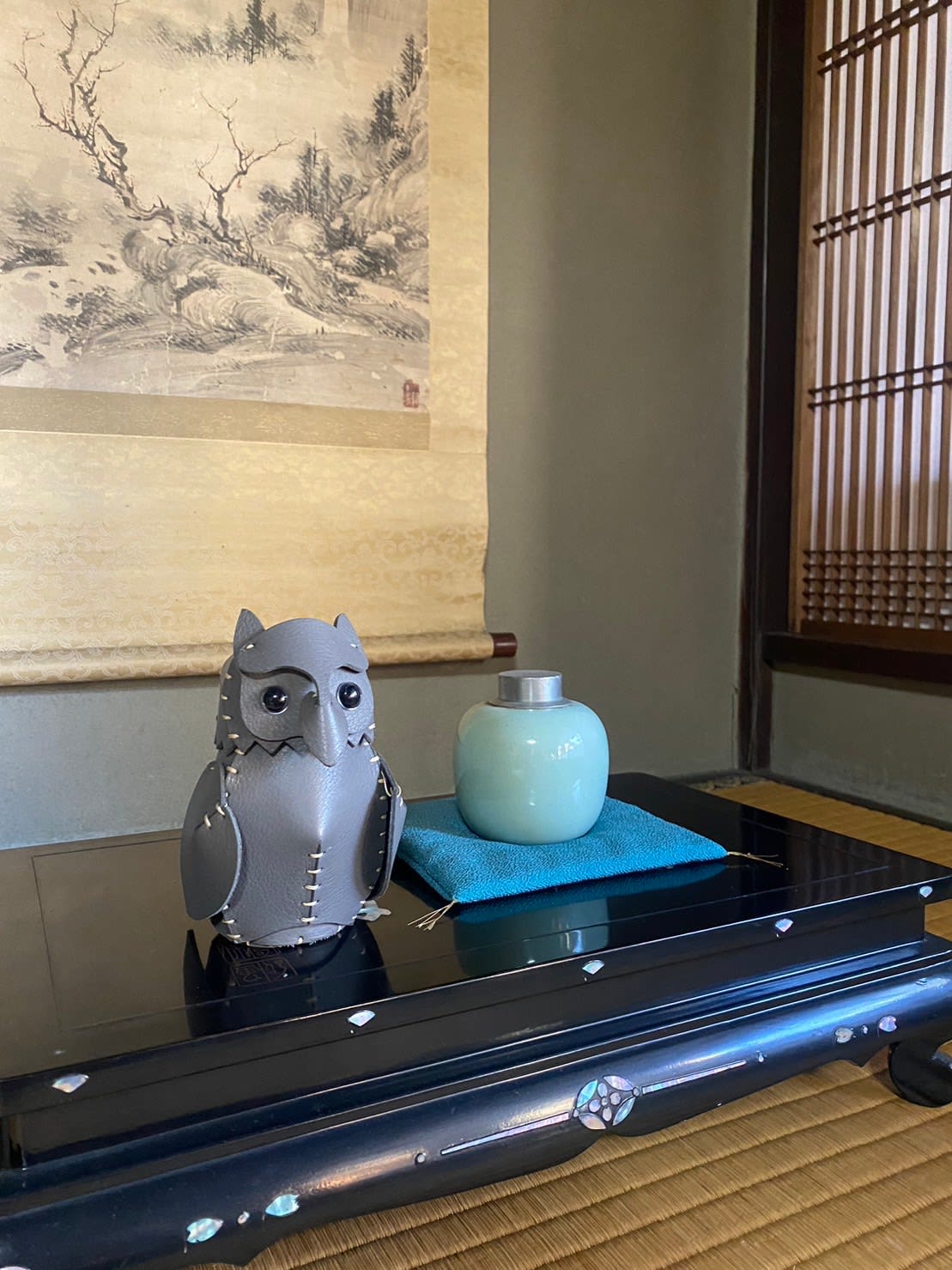
There was a time in Japan when the survival of a child into adulthood was not something that could be assumed.
Life was shorter. Illness came without warning. The distance between birth and a full life was a distance that could not always be crossed. And so people made things — small objects, carefully shaped, placed in visible parts of the home — that held their hopes for the ones they loved. Not as decoration. As intention. As a prayer given a physical form and put somewhere it could be seen every day.
This is where the objects we build our kits around come from.
These traditional lucky charms and folk toys were designed, from the beginning, to be looked at. To occupy a place in a room where daily life moved past them. The idea was not that you would stop and contemplate them each time. The idea was simpler: that they would be there, and that when your eye found them — between one task and the next, in the light of a different hour — the wish they carried would return to you briefly.
They were made to enter the scenery of a life, and to hold a meaning quietly inside it.
They were also made with variation built in. The same motif — a different size, a different shade, a small gesture by one maker that another didn’t make. This was not inconsistency. It was the natural expression of hands working within a tradition, each one leaving a trace of themselves in the form. The variation was what made them collectible, across generations and still today — not because they are rare, but because each one is slightly different from the last, in the way that things made by hand always are.
When I began thinking about what the leather model kits should be, this history was already in my mind. The owl came first. The goldfish followed. The concept of lucky charms was there from the beginning, and the idea of folk toys as a specific category came later — but both were pointing at the same thing.
The world I was working in, at that time, gave the concept a weight I hadn’t fully anticipated.
The years after the pandemic settled into one form of uncertainty that was replaced by another. Wars began that seemed to belong to an earlier century. The feeling of instability — not dramatic, but persistent — became the texture of ordinary life for many people. I found myself thinking about the objects that people in earlier centuries had made and placed in their homes, and I understood for the first time that the need for them had not disappeared. It had only been waiting.
People still need to place a hope somewhere physical.
A leather model kit can be given in two states.
If you build it and give it completed, something happens in the making that the finished object carries. You spend time working with your hands, and during that time, the person you’re making it for is present in your mind. The thought of them and the movement of the work exist together, in the same hours. By the time you’re done, that time is inside the object in a way that nothing else could have put there.
If you give the kit unbuilt, something different happens: the making becomes part of the gift. The person who receives it builds it themselves. They choose where to put it when it’s finished. They discover, in the process, something about working slowly and with their hands. The wish of the giver, in this case, is that the receiver will find that experience.
In both cases, a wish is being passed through the object. The form it takes depends on the hands it passes through.
Where an object is placed matters.
An owl belongs near the entrance — it watches what enters and what leaves. A goldfish belongs in a room where people gather and stay, drawing something good toward the center of a shared life. A small bird is meant to be carried — attached to a bag, moving through the world with the person who keeps it, collecting small things as it goes.
These placements are not arbitrary. They follow the original logic of the objects, the specific nature of each wish, where in a life it was meant to operate.
There is an owl in my child’s room.
My child has decided it is a piggy bank, and uses it as one.
I noticed, some time after placing it there, that I had stopped seeing it. Not because it disappeared — but because it had become part of the room. The shape was there when I looked. It was simply there, as things are that have been in a place long enough to belong to it.
I think that is the right outcome for an object like this.
Perhaps it is also when something shifts. Not in the object — but in its relationship to the room. What began as something displayed becomes, at some point, something that watches over. The direction quietly reverses. You are no longer looking at it. It is, in some way, looking at you.
Not demanding attention. Not performing its meaning. Just present in the ordinary flow of a day, until the moment — small, unannounced — when the eye finds it and something in the person looking goes briefly quiet.
Just as Japanese folk toys, for centuries, once did.
Muneshige Tanigawa / Kyoto Makotoya
日本には、子供が成人まで生きられるかどうか、確かめる術がなかった時代があった。
命は短かった。病は予告なく来た。生まれてから一つの人生を全うするまでの距離は、いつも渡り切れるものではなかった。だから人々は作った。小さな、丁寧に形を与えられた物を。家の中の、目に入る場所に置かれる物を。大切な人への希望を、かたちとして持たせた物を。飾りとしてではなく、意図として。毎日目に入る場所に置かれた、物の形をした祈りとして。
私たちが模型キットのモチーフとして選ぶ縁起物や郷土玩具は、そこから来ている。
これらの縁起物や郷土玩具は、最初から「見られるために」作られていた。
日常の動きが通り過ぎる場所に、ある物として置かれるために。毎回立ち止まって向き合うためではない。考え方はもっとシンプルだった。そこにある。そして生活の合間に——仕事と仕事の間、違う時間帯の光の中で——目に入ったとき、その物が持っている願いが、短くよみがえる。
誰かの生活の景色に入り込んで、意味を静かに内側に持ち続けるために作られていた。
これらの物には、バリエーションが備わっていた。同じモチーフで、サイズが違う。色が少し違う。ある職人が加えた小さな動作を、別の職人は加えない。それは不一致ではなかった。伝統の中で動く手が自然に残す、それぞれの痕跡だった。
バリエーションがあるから、今も収集する人がいる。珍しいからではない。手で作られたものは、いつも、前のものと少しだけ違うから。
革模型キットが何であるべきかを考え始めたとき、この歴史はすでに頭の中にあった。フクロウが最初で、金魚が続いた。縁起物というコンセプトは最初からあり、郷土玩具という具体的な括りはあとから加わった。でも両方が、同じ方向を向いていた。
当時自分が置かれていた世界が、そのコンセプトに、予想していなかった重さを与えた。
コロナ禍が落ち着いた後、不安の形が変わっただけで、不安は続いた。前の世紀のことのように感じる戦争が、また始まった。不安定さの感覚——劇的ではないが、持続する——が、多くの人の日常の手触りになった。かつての時代に人々が作り、家に置いていたものを思い、初めて理解したことがあった。そのような物への必要性は消えていなかった。ただ待っていただけだった。
人はまだ、希望を物理的などこかに置きたい、と思っている。
革模型キットは、二つの状態で贈ることができる。
組み立てて完成させてから贈る場合、作る中で何かが起きる。手を動かして過ごす時間の中に、贈る相手がいる。その人のことと、作業の動きが、同じ時間の中に共にある。完成したとき、その時間はものの中に入っている。他の何も、それをそこに置くことはできない。
キットのまま贈る場合、作ること自体が贈り物になる。受け取った人が自分で作る。完成したとき、どこに置くかを自分で選ぶ。ゆっくり、手を使って何かをする経験を、その過程で見つける。この場合、贈る人の願いは「その体験をしてほしい」ということだ。
どちらの場合も、願いが物を通って手渡されている。その形は、どの手を通るかによって変わる。
何をどこに置くかは、意味を持つ。
フクロウは玄関に置く——何が入り、何が出ていくかを見守る場所に。金魚は、人が集まり長く滞在する部屋に——何か良いものを、共有された生活の中心へ引き寄せるように。小鳥は身につけるために作った——バッグに取り付けて、持ち主と一緒に世界を移動しながら、小さなものを集めていくように。
これらの置き場所は、恣意的ではない。それぞれの物の縁起の意味、その願いが生活のどこで働くものかという、元々の論理に従っている。
子供部屋に、フクロウがある。
子供は、貯金箱として使うことに決め、そう使っている。
置いてしばらくして、自分がそれを見なくなっていることに気がついた。消えたわけではない。ただその部屋の一部になっていた。目を向ければそこにある。ただ、そこにある。十分な時間、その場所にあったものが持つように、当たり前に。
それが、こういう物の正しい結末だと思う。
ひょっとしたら、そこで何かが変わるのかもしれない。物ではなく、部屋との関係が。飾られる存在として始まったものが、革模型キットが飾った日からどこかの時点で、見守る存在に変わる。方向が、静かに逆になる。もはやこちらが見ているのではなく、どこかあちら側が、見ている。
注目を求めない。意味を演じない。ただ日常の流れの中に存在して、ある瞬間——小さく、予告なく——目がそこへ行き、見ている人の何かが、短く静かになる。
日本の郷土玩具が、何百年もそうであったように。