
The Shape It Took
Grain Patch — Part 1 of 4
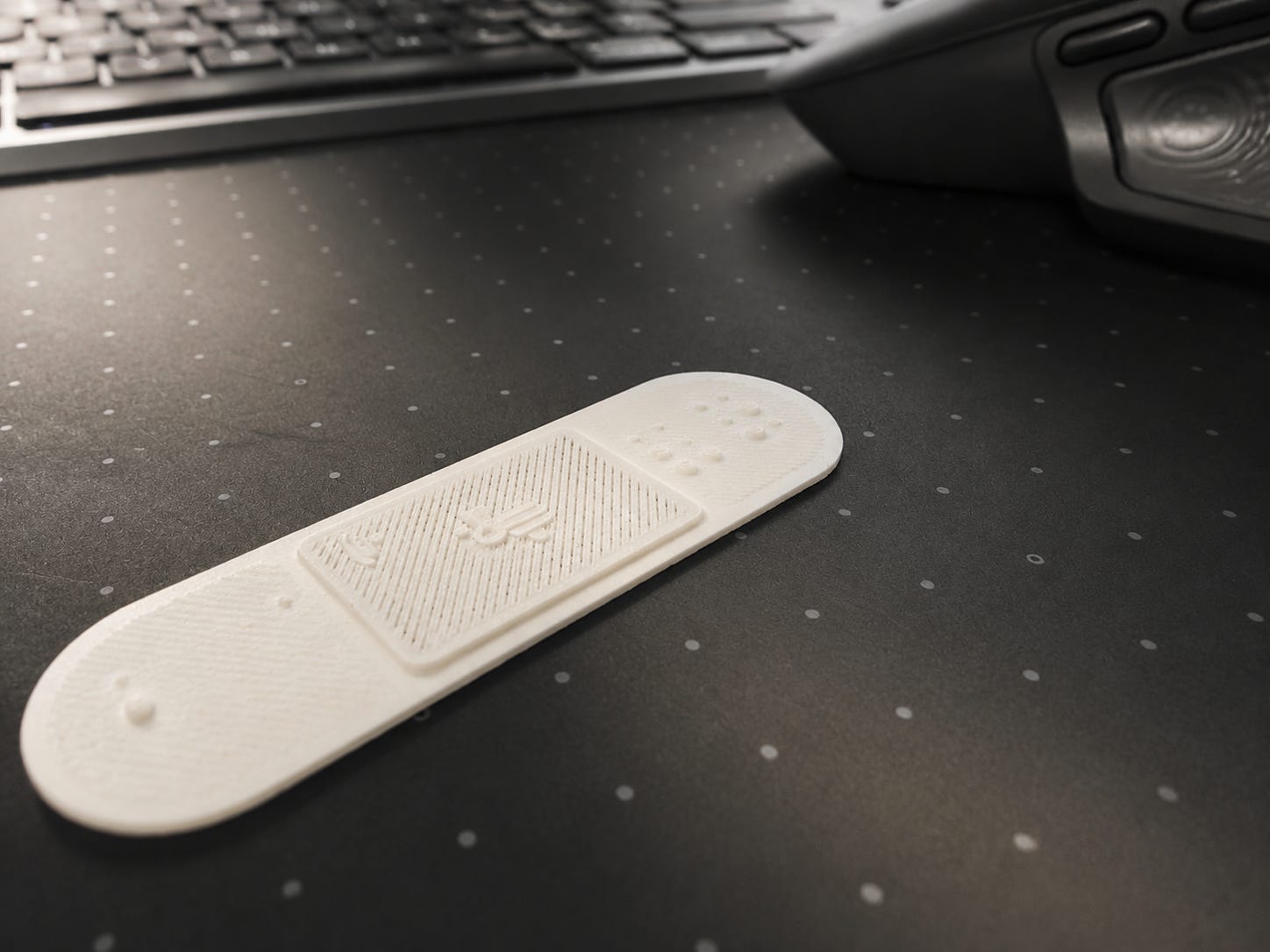
There is a strange object sitting on my desk.
A bandage, made of leather. The small adhesive kind — the kind you’d find in a medicine cabinet anywhere in the world.
It doesn’t heal anything. It was never meant to heal anything. And for a long time, even I couldn’t have told you what it was for — which is a strange thing to admit about something you made with your own hands. But that’s how it was.
This is the story of how it came to have this shape.
For a long time — I couldn’t tell you exactly how long — I had been thinking about wounds.
Not just the kind that bleed. Those at least have the decency to announce themselves. I mean the quieter kind. The kind the heart hangs on to for years without mentioning it to anyone. The kind time leaves on us — needing something and not being able to reach it, the small daily losses nobody bothers to name.
I had no idea what to do with this thought. It wasn’t the sort of thought that leads anywhere in particular. I just kept it near me, the way you keep a stone picked up on some beach for reasons you can no longer remember.
Around the same time, in a different notebook, there was another idea.
A time capsule made of leather — more or less. A small object that would hold on to something for years and then, one day, hand it back intact.
There was one problem with it, and I couldn’t solve it. It needed a chip inside, a thing about as thin as a fingernail, and the chip needed somewhere to live. I tried one place after another. Every one of them looked like I was hiding something — which, in a way, I suppose I was. So the idea stalled, and I set it aside and let it gather dust.
A leather bandage that healed nothing.
A capsule with nowhere to put its heart.
Two ideas in two notebooks, sitting on the same shelf, ignoring each other for months. Ideas can be like that.
Eventually I started making samples of the bandage. Different sizes, printed one after another on a 3D printer, and at night I would sit in front of the screen fixing the drawings — the way you fix anything at night, slowly, with more coffee than is probably good for you.
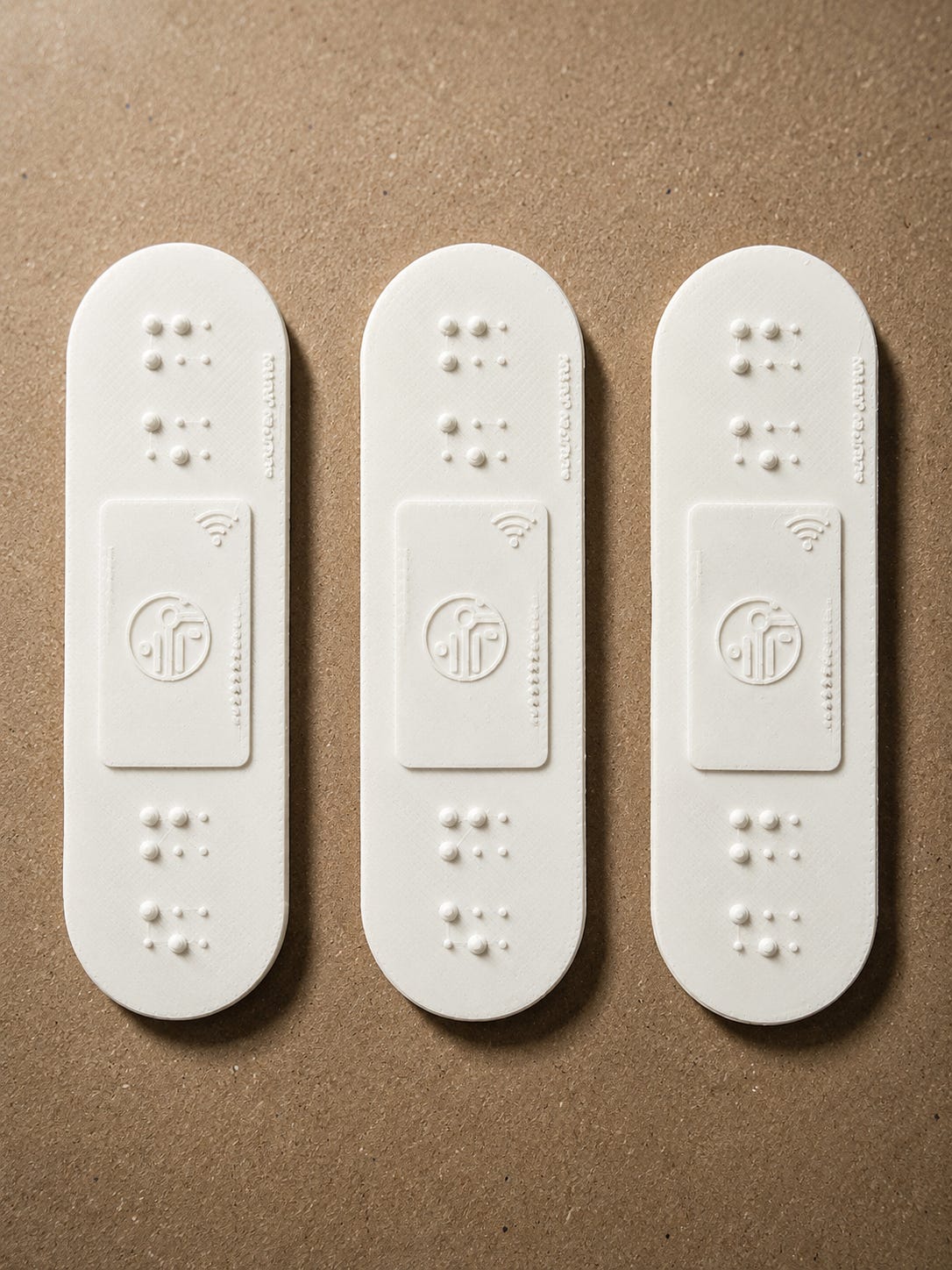
Every one of those bandages, anywhere in the world, has a raised center. The pad, the part that rests over the wound. I had drawn that pad for exactly one reason: without it, the shape stops reading as a bandage. It was there so that anyone, in any country, would look at the thing and know what it was in about half a second.
One night I was adjusting that pad on the screen, and I stopped.
The pad was hollow.
It was exactly the size of the chip.
The part of a bandage that exists to protect the wound was the one place a memory could live.
The two notebooks quietly became one notebook.
I want to be accurate about that day. I didn’t design a function. I’m not that clever. A shape that already meant something simply made room, on its own, for the thing that needed a place to stay.
All I did was happen to be sitting there when it did.
What went inside, and why — that took longer. I’ll get to it.
Something was beginning to form.
It didn’t need a name yet.
Continued in Part 2 — A Name for It.
Muneshige Tanigawa / Kyoto Makotoya
かたちが先だった
Grain Patch 連載 第1回(全4回)
机の上に、奇妙なものがひとつ載っている。
革でできた絆創膏だ。どこの国の薬箱にも入っている、あの小さな貼るやつのことだ。
貼っても何も治らない。もともと治すために作られていない。おまけにしばらくのあいだ、作った本人にさえ、それが何のためのものなのか説明できなかった。自分の手で作ったものについてこんなことを言うのはずいぶん妙な話だけれど、実際そうだったのだから仕方ない。
これは、それがこのかたちになるまでの話だ。
長いあいだ——正確にどれくらいかと訊かれると困るのだが——僕は「傷」について考えていた。
血の出る傷のことだけではない。ああいうものは少なくとも、自分から名乗り出てくれる。そうではなくて、もっと静かな傷のことだ。心が何年も抱えたまま、誰にも打ち明けない種類の傷。時間が僕らにつけていく傷——必要なものに、必要なときに手が届かないこと。誰もわざわざ名前をつけない、日々の小さな喪失。
その考えをどうすればいいのか、僕にはわからなかった。どこかに通じている種類の考えでもなかった。ただ手放さずに持っていた。どこかの浜辺で、理由ももう思い出せないまま拾った石を、捨てずに持っているみたいに。
同じ頃、別のノートには、もうひとつの構想があった。
革でできたタイムカプセル——まあ、だいたいそういうものだ。何かを何年も預かっておいて、ある日、そっくりそのまま返してくれる小さな物体。
これにはひとつ問題があって、それがどうしても解けなかった。中に爪くらいの薄さのチップを収める必要があり、チップには居場所が要る。あちこち試してみた。どこに置いても、何かを隠しているようにしか見えなかった。まあ、ある意味では実際に隠していたわけだけれど。それで構想は止まり、僕はそれを脇に置いて、埃をかぶるにまかせた。
何も治さない、革の絆創膏。
心臓の置き場所のない、カプセル。
ふたつの構想がふたつのノートに入って、同じ棚の上で、何か月も互いを無視していた。アイデアというのは、そういうことをする。
やがて僕は絆創膏のサンプルを作りはじめた。サイズ違いを3Dプリンターで次々に出力し、夜になると画面の前に座って図面を直した。夜に何かを直すときのやり方で——つまりゆっくりと、たぶん体に良くない量のコーヒーと一緒に。
世界中のどの絆創膏にも、中央にふくらみがある。パッドと呼ばれる、傷の上に載る部分だ。僕があのパッドを描いた理由はきっかりひとつしかなかった。あれがないと、絆創膏に見えないのだ。どこの国の誰が見ても、半秒でこれが何だかわかるように、あれはそこにあった。
ある夜、そのパッドを画面の上で直していて、僕は手を止めた。
パッドの中は、空洞だった。
チップと、ぴったり同じ大きさだった。
絆創膏の、傷を守るためにある部分が、記憶の住める唯一の場所だった。
ふたつのノートは、静かに一冊になった。
その日のことは、正確に書いておきたい。僕は機能を設計したわけではない。そんなに頭が良くない。すでに意味を持っていたかたちが、居場所を必要としていたものに、勝手に場所を空けたのだ。
僕がしたことといえば、そのときたまたまそこに座っていたことくらいだ。
中に何を入れるのか、それはなぜか——そこから先は、もう少し時間がかかった。順番に書いていく。
何かが形になりはじめていた。
まだ名前は要らなかった。
第2回「名前を授かること」につづく。
Muneshige Tanigawa / Kyoto Makotoya