
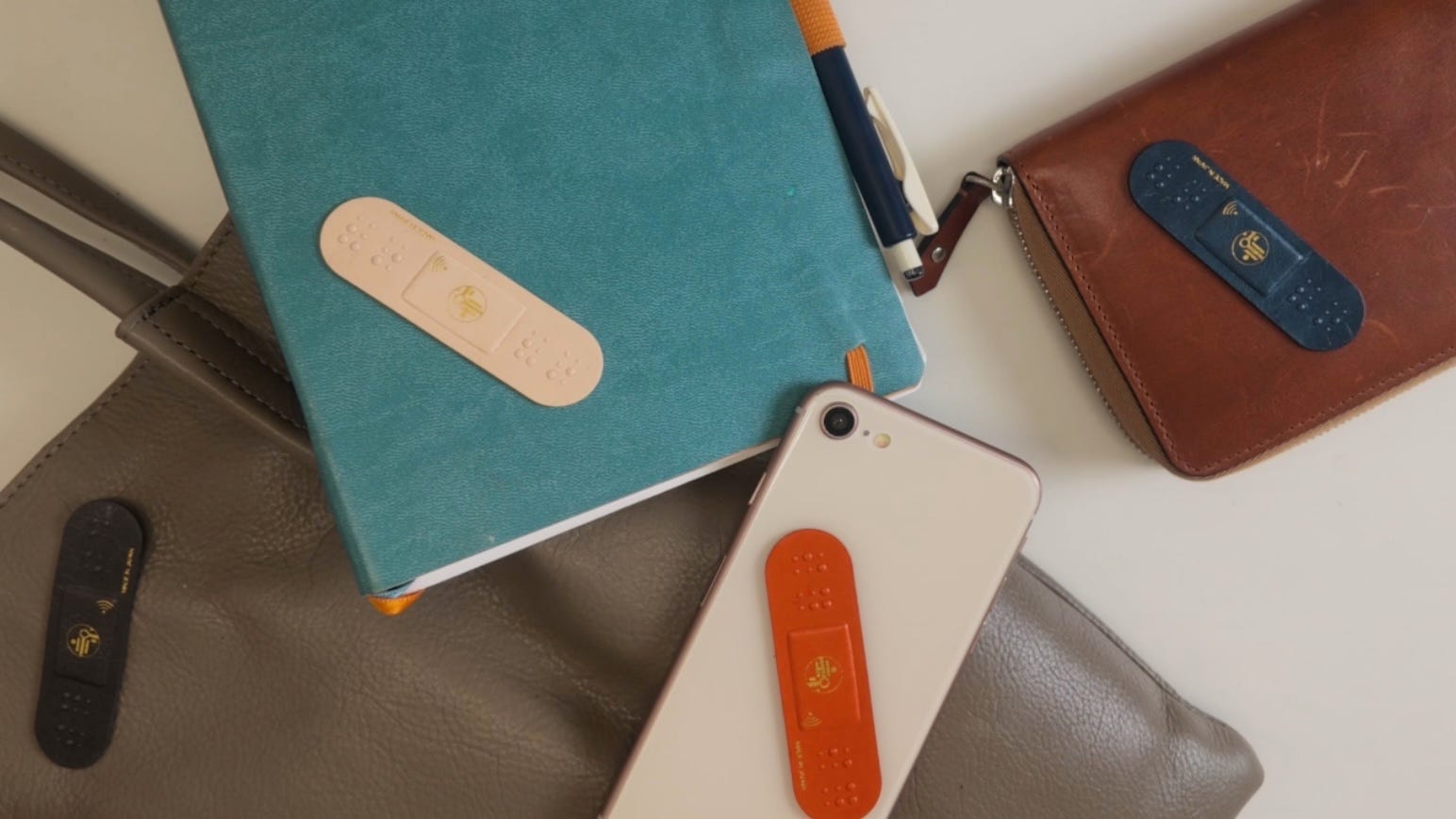
The chip inside a Grain Patch is small. It holds a few lines of text, and that’s it. No photos, no archive, no feed.
I used to think of this as a limitation. These days I think it’s the whole point.
When you can keep only a few words, you have to choose. And choosing, it turns out, is slow work.
A line you’ve underlined in three different books over the years. Somebody’s name. A place. The thing a friend said to you long ago, which you kept, and never once mentioned to them.
Sitting with that question — writing candidates down, crossing them out, being quietly surprised by what refuses to be crossed out — that hour is not preparation for using this object.
That hour is the first use.
If I kept one patch for myself, I know what would go into it: the words I go back to when the day gets loud.
I’m not going to write them here. That’s rather the point too.
There are three patches in the box. This was never about quantity.
One is for you.
One is for giving away — words being easier to give than advice, and considerably more durable.
And one is for leaving empty. Nothing says everything has to be decided the day the box is opened. Waiting for the right words is also a way of carrying them.
In Japan, shrines sell omamori — small brocade amulets, gold thread, fine embroidery. There is one for business, one for traffic safety, one for health. The shrines seem to compete on the designs, and some are genuinely beautiful.
Here is the curious part: nobody ever opens one.
Something is inside — you can feel it through the cloth. But whether the business amulet actually contains anything business-specific, no one can say. Opening it isn’t forbidden, exactly. It simply isn’t done. The whole arrangement runs on not looking. Believe, and be saved.
A Grain Patch looks much the same from the outside. Nothing about it proves there are any words in it at all.
But there is one small difference. The words inside are ones you put there yourself. And on the days you need to, you can look.
Here is the scene I imagine most often. I’ve imagined it so many times by now that it feels less like a plan and more like a memory.
A difficult day. Nothing has gone wrong, exactly — nothing you could point to — and still you feel worn thin. Somewhere on your bag, or on the back of your phone, there is a small leather patch.
You take out your phone and hold it over the leather.
The words appear.
You knew them already, of course. You chose them yourself. But there is a particular calm in watching them arrive — something you decided in a clear hour, still there, still saying exactly the same thing, in an hour that isn’t clear at all.
Not advice. Not a notification. Just confirmation.
It’s there. It’s been there the whole time.
Leather doesn’t stay new. It scuffs, it darkens, it takes on the shape of the life going on around it. Someday a patch may fray at the edge, or come away from the bag it rode on for years.
In Japan, you sometimes see someone wearing a thin woven bracelet — a misanga, it’s called, a custom that drifted over from Brazil at some point and quietly stayed. The idea is to wear it until it wears through and snaps. And when it snaps, so the story goes, the wish comes true.
If a Grain Patch someday comes away, I hope its owner feels something like that.
Not: it broke.
It finished.
A strange object on a desk. A wound, a shape, a name, a few invisible words.
That’s the whole story — or at least the part of it that words can carry. The rest, you’d have to hold.
In a few days, I return to New York — a show called Shoppe Object.
This time, what I bring will have a name.
Muneshige Tanigawa / Kyoto Makotoya
言葉を纏う
Grain Patch 連載 最終回(全4回)
Grain Patchの中のチップは小さい。入るのは数行のテキストだけ。それでおしまいだ。写真も入らないし、アーカイブもフィードもない。
以前はこれを制約だと思っていた。このごろは、これこそが要点なのだと思っている。
数行しか持てないとなると、人は選ばなくてはならない。そして選ぶというのは、やってみるとわかるが、時間のかかる仕事だ。
長い年月のあいだに、三冊の別々の本で線を引いてきた一行。誰かの名前。ある場所。ずっと昔に友人が言った一言——自分はそれを持ちつづけてきて、本人には一度も言っていない。
その問いと一緒に座っている時間——候補を書き出しては消し、どうしても消せないものが残るのを眺めて静かに驚く——あの一時間は、この物体を使うための準備ではない。
あの一時間が、最初の使用なのだ。
もし自分のために一枚だけ取っておくなら、何を入れるかは決まっている。日々が騒がしくなったときに戻っていく、あの言葉だ。
ここには書かない。それもまた要点のうちだから。
箱にはパッチが三枚入っている。数を稼ぎたかったわけではない。
一枚は、自分のため。
一枚は、誰かに贈るため——言葉というのは助言よりずっと贈りやすく、そしてかなり長持ちする。
そして一枚は、空のままにしておくため。箱を開けた日に何もかも決めなければならない、という法律はどこにもない。正しい言葉を待つことも、言葉の持ち方のひとつだ。
日本の神社では、お守りが売られている。錦の小さな袋に、金糸や刺繍。商売繁盛のもの、交通安全のもの、健康のもの。どの神社もデザインにしのぎを削っているように見えるし、実際、きれいなものがたくさんある。
面白いのは、ここからだ。誰も、中を開けてみない。
布越しに、何かが入っているのはわかる。でも、商売繁盛のお守りの中に本当に商売繁盛に特化した何かが入っているのかは、誰にも言えない。開けることが禁じられているわけでは、たぶんない。ただ、誰もしないのだ。あの仕組みの全体が、「見ないこと」の上で動いている。信じるものは救われる、というやつだ。
Grain Patchも、外から見るかぎりはよく似ている。中に本当に言葉が入っている証拠は、見た目のどこにもない。
ただ、ひとつだけ小さな違いがある。中の言葉は、自分で入れたものだ。そして、必要な日には、見ることができる。
いちばんよく思い浮かべる場面がある。あまりに何度も思い浮かべたので、もう計画というより記憶に近くなっている。
難しい一日。何かが起きたわけではない——指させるようなことは、何も。それでも、すり減っている。鞄のどこかに、あるいはスマホの背中に、小さな革のパッチがある。
スマホを取り出して、革の上にかざす。
言葉が現れる。
もちろん、知っている言葉だ。自分で選んだのだから。それでも、それが現れてくるのを見ることには独特の静けさがある。頭の澄んでいた時間に自分が決めたものが、まだそこにいて、まだ寸分違わず同じことを言っている。少しも澄んでいない時間の中で。
助言ではない。通知でもない。ただの確認だ。
そこにある。ずっと、そこにあった。
革は新品のままではいてくれない。擦れて、色が深くなって、まわりで進行している暮らしのかたちを帯びていく。いつか、パッチの端がほころびる日が来るかもしれないし、何年も乗っていた鞄から剥がれる日が来るかもしれない。
日本では、細い編み紐を手首につけている人を、ときどき見かける。ミサンガと呼ばれるものだ。いつだったかブラジルから流れてきて、そのまま静かに居着いた習慣らしい。擦り切れて、ぷつんと切れるまで身につける。そして切れたとき、願いが叶うのだと言われている。
いつかGrain Patchが剥がれる日が来たら、持ち主がそれに近い何かを感じてくれたらいいと思う。
壊れた、ではなく。
役目を終えた、と。
机の上の奇妙な物。傷と、かたちと、名前と、いくつかの見えない言葉。
これで物語は全部だ——少なくとも、言葉で運べるぶんは。残りは、持ってみてもらうしかない。
数日後、僕はもう一度ニューヨークへ行く。Shoppe Objectという名前の展示会だ。
今度持っていくものには、名前がある。
Muneshige Tanigawa / Kyoto Makotoya