
By the third day of the show, I had stopped standing in my own booth.
This sounds like negligence, so let me explain. I found a chair three or four meters away, with a clear view of my own table, and I sat in it. From there I watched people arrive at the products without me attached to them. Someone would stop. Pick up the owl. Hold their phone over a patch, frown, try again. And I stayed in the chair.
To anyone watching, I was either a customer taking an unusually long time to decide, or the least ambitious industrial spy in New York.
But something important happens in those unattended seconds. A person standing in front of a strange object needs time to form the question — what is this? — and a maker who pounces too early answers a question that hasn’t been born yet. So I learned to wait, and then to approach slowly, from the front, where I could be seen coming.
The chair paid a second dividend, one I hadn’t planned on. Standing inside your own booth does strange things to your statistics: from in there, the neighboring booths seemed to stop everyone, and mine seemed to be quietly repelling the species — a small negative campaign, running all day, with myself as its only audience. From three meters away, I could see it simply wasn’t true. People stopped, about as often as they stopped anywhere. And I could finally see what the inside view had been hiding: which animal a hand reaches for first, which box gets lifted second, where the eyes go while the hands are busy. The distance corrected two things at once — the visitors’ experience, and my own eyesight.
It took me two days and one misread wall to learn it: the product asks for a slower speed. The least I could do was stop selling it at a faster one.
The city, meanwhile, was running its own seminar on the subject.
In February, New York had made me nervous, and my whole stay had happened inside a narrow corridor: hotel, venue, hotel. This time the nervousness was simply gone — nobody asked my permission, it just wasn’t there anymore — and the city widened accordingly.
My hotel was a long way from the venue, so I commuted by rental bicycle. I hadn’t consulted anyone about this plan in advance. If I had, I suspect I would have been talked out of it.
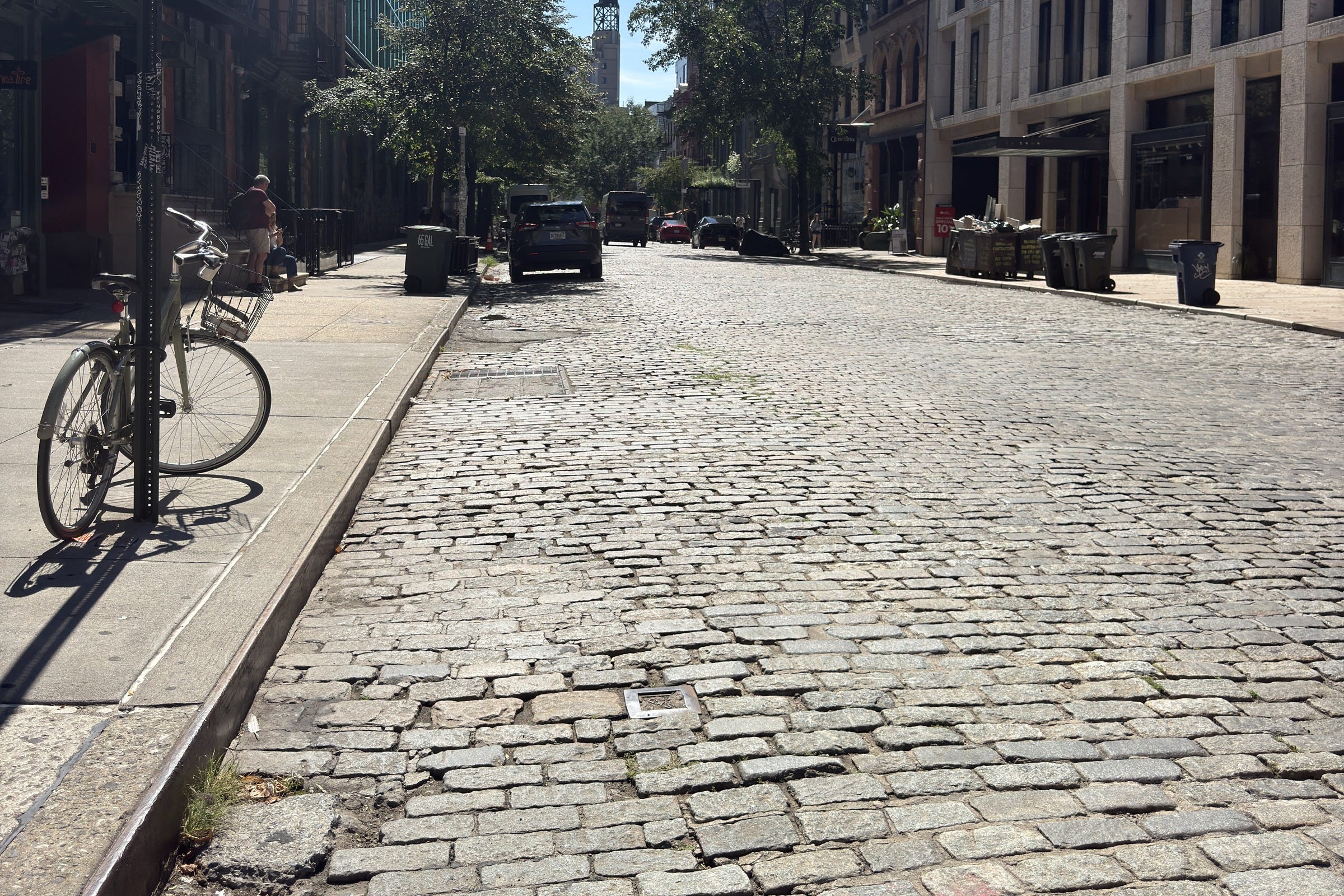
A bicycle turns out to be a third speed of city. Walking, you see one block deeply and forget the rest. From a train, you see nothing and arrive. A bicycle sits exactly in between: fast enough that the neighborhoods connect into one continuous animal, slow enough that you notice the shops change, the faces change, the shoes change. Same streets, different speed, different city.
I was beginning to sense a theme.
And when a city widens, it seems, so does the room for coincidence.
Midway through the stay, a message arrived. It was from a longtime client of my main business in Japan — the apparel work — a man I’ve known and liked for years. He was in New York too, he said. On business. That same week.
We are good friends, but he lives in Tokyo and I live in Kyoto. We stay in touch; we never run into each other. The bullet train could close that gap in two and a half hours, and for five or six years, neither of us had taken it.
And now here we both were, in the same week, on the same island on the far side of the Pacific, having dinner together in Manhattan.
I briefly considered calculating the odds, and decided against it. A number like that is ruined by being computed. All I know is that such things really do happen. And that, in my experience, they don’t happen while you’re living inside a narrow corridor. They happen when the city widens.
Selling was only half of what I had crossed the ocean to do. The other half was research: museum shops, in different corners of the city, which I visited the way other people visit real estate.
There are, it turns out, two kinds.
The first kind is attached to a museum, and what it sells, mostly, is the museum’s name. The name is printed on tote bags, on caps, on pencil cases, and that section of the floor is always the busiest. This is not cynicism; it’s arithmetic — you can measure it in square meters. The design objects, the carefully selected ones, sit in a quieter corner, and after a while I understood their job: they are there to keep the shop’s dignity, the way a hotel lobby keeps a piano.
The second kind stands on its own, away from any museum, and it is a different animal entirely. Floors arranged by genre, objects given room to breathe, the whole place composed like an argument — one buyer’s view of the world, expressed in inventory. People come there for the objects themselves, not for proof that they visited a building.
In one of those stores, I came to a stop in front of a shelf labeled Desk & Tech. This, it turned out, was where the DIY kits lived — different makers, different countries, all filed together under two words and an ampersand. I stood there considerably longer than the shelf was designed for, because the label was the interesting part. Somebody in that building had already chewed the category on the customer’s behalf. Nobody arriving at that shelf has to build the question — what is this? — from nothing; the store has pre-digested the answer into a sign and a row of good lighting. A shelf name, I understood, standing there, is a store doing the translating. This one had designed its translation all the way down to the signage.
I took a photo, the way you photograph somebody else’s homework.
I stood in both kinds of shop, watching shoppers instead of shelves, and asked myself the obvious question at last: in which of these rooms would my products be read at the right speed? And who, exactly, do I need to meet for that to happen?
Obvious questions. It took crossing an ocean twice to arrive at them. That seems to be the going rate.
And then there was the night the city decided to teach by force.
I had dinner near Central Park with the maker from the booth next to mine — a friend since the February show, and someone who had started selling to America years before I ever printed an English line sheet. She makes small, lovely objects that mix far more of Japan into themselves than mine do: pincushions set in Japanese ceramics, sewing boxes in super-miniature — made for display, and nearly too pretty to actually sew with. Most of what I know about how to carry yourself through three days of a trade show, I learned by watching her.
She took something from my table too, back in February: the idea of a kit. This August, her booth had new DIY kits made of kimono fabric. One concept, traded against one education in conduct. As barters go, I think we both did fine.
Afterward I walked toward the subway to head back downtown to my hotel.
The entrance was locked. A folding gate, a chain, no explanation.
An accident, I decided, something local, and walked to the next station. Locked. The next one. Locked. By the third station I had begun to suspect a conspiracy, and by the fourth I had stopped suspecting anything and simply walked — block after block, all the way back to the hotel, arriving damp and philosophical.
Here was the detail that kept it interesting: the uptown entrances were all open. Only the downtown side was locked, station after station, half the world politely closed for the evening.
At the hotel, the internet knew the answer. It usually does. The downtown lines were shut from a certain hour every night for major repair work. This had apparently been decided, scheduled, and put into effect — and announced, as far as I could tell, nowhere a foreign visitor with a phone would ever see it.
What impressed me was the philosophy of the arrangement. If you had gone uptown for the evening, getting home again was, officially, your own problem. Solve it. Walk, or figure something out. In Japan, this would lead the morning news and someone would bow on television. Here, nobody I passed seemed to consider it worth a shrug.
And then there was the smell. Summer Manhattan, at walking speed, has a smell — whether it’s the age of the sewer system or something else entirely, I don’t know, but it rises out of the grates at night, block after block. In February it hadn’t existed. Stranger still: on the bicycle it didn’t exist either. I had been crossing this exact city every morning at fifteen kilometers an hour and smelling nothing at all. Slow down to a walk, and there it was, faithful as a doorman.
Speed, it turns out, doesn’t just decide what you see. It decides what the world consists of. The buyers who had walked past my booth all week hadn’t been seeing a lesser version of it. They had been seeing a different object altogether.
I walked the twenty-five blocks from Columbus Circle down toward 34th Street thinking, in no particular order: so this is America, and: these are the people I am trying to sell a product to.
Somewhere in those twenty-five blocks, the two thoughts connected.
This is a city that explains nothing. The subway doesn’t apologize; the signage assumes you’ll cope; the whole place runs on the confidence that you will figure it out. And people do figure it out — I did, on foot, in August heat.
But an object in a shop doesn’t get twenty-five blocks of your patience. It gets a second and a half.
The city can afford to explain nothing. My product can’t. A small leather patch with invisible words inside has exactly one chance to make you form the question — what is this? — and if the answer doesn’t arrive in the right shape, at the right speed, the hand goes back to the conveyor belt.
The show had already told me the concept wasn’t crossing the room. The walk home told me whose job the crossing was. Not the room’s. Not the visitor’s. Mine.
On the last day, I skipped the morning at my own booth and spent it on the final round of research — SoHo, NoHo, one more design store. Then I came back to the venue and did something I hadn’t yet done all week: I walked the entire show myself, aisle by aisle, as a visitor.
Moving at that speed at last — the river’s speed, from inside the river — I noticed something about the booths where the crowds were. You could tell what they sold at a glance. One glance, from the aisle, without breaking stride. Like the second visitor from last time, I caught myself explaining those products to myself before anyone behind the table had said a word.
That is where the phrase arrived. It has been sitting in my head ever since, and I keep looking at it the way you look at a line somebody else wrote:
Design the translation.
Not louder explanations. Not more features. A designed way for the idea at the center — a few words, chosen slowly, worn quietly — to survive contact with a hurrying world. What that looks like, I don’t fully know yet. Some of it will be pictures instead of sentences. Some of it will be ten seconds of someone else’s hands on a screen. Some of it I probably haven’t imagined.
In February, the show happens again. Same building, same floor, in all likelihood the same corner — the same room, for all practical purposes.
The room won’t have changed. The speed won’t have changed either.
But this time, what I bring will be able to introduce itself.
Muneshige Tanigawa / Kyoto Makotoya
別の速度
会期三日目までに、僕は自分のブースに立つのをやめていた。
職務放棄に聞こえるので、説明させてほしい。自分の机がよく見える、3、4メートル離れた場所に椅子を見つけて、僕はそこに座った。そこから、僕という付属品のついていない商品に、人々が辿り着くのを眺めた。誰かが立ち止まる。フクロウを持ち上げる。パッチの上にスマホをかざし、眉を寄せ、もう一度かざす。僕は、椅子にいたままでいる。
傍から見れば、僕は決断に異様に時間のかかっている客か、さもなければ、ニューヨークでいちばん向上心のない産業スパイだったと思う。
でも、あの誰もついていない数秒間に、大事なことが起きている。見知らぬ物体の前に立った人間には、問いが生まれるまでの時間が要る——これは何だ?——そして、早く飛びつきすぎた作り手は、まだ生まれてもいない問いに答えてしまう。だから僕は、待つことを覚えた。それから、ゆっくりと、正面から、近づいてくるのが見える角度で近づくことを。
椅子には、予定していなかった二つ目の配当もあった。自分のブースの中に立っていると、統計が奇妙なことになるのだ。中から見ていると、隣のブースはやけに人が立ち止まるように見えて、僕のブースは静かに人類を遠ざけているように見えた——観客が僕一人しかいない、小さなネガティブキャンペーンが、一日中、頭の中で放送されていた。3メートル離れると、それが端的に事実ではないと分かった。人は立ち止まっていた。よそと同じくらいの頻度で。そして、内側からの眺めが隠していたものが、ようやく見えた。手が最初に伸びるのはどの動物か。二番目に持ち上げられるのはどの箱か。手がふさがっているあいだ、目はどこへ行くのか。あの距離は、二つのものを同時に矯正していた——来場者の体験と、僕の視力だ。
学ぶのに二日と、読み違えられた壁がひとつ必要だった。この商品は、遅い速度を求めている。せめて僕が、それより速い速度で売るのはやめよう、ということだ。
その間、街のほうも、同じ主題で独自のセミナーを開講していた。
2月のニューヨークは、僕を緊張させた。滞在の全部が、ホテルと会場のあいだの細い廊下の中で起きた。今回、その緊張は、ただ消えていた——誰かの許可を得たわけでもなく、気がついたら無かった——そして、そのぶん街が広がった。
ホテルは会場からかなり離れていたので、レンタル自転車で通った。この計画は、事前に誰にも相談しなかった。相談していたら、たぶん止められていたからだ。
自転車というのは、街の第三の速度であることが分かった。徒歩だと、一つの街区を深く見て、残りを忘れる。電車だと、何も見ずに到着する。自転車はちょうどその中間にいる。街と街がひとつづきの生き物につながって見えるくらいには速く、店が変わり、顔ぶれが変わり、靴が変わるのに気づけるくらいには遅い。同じ通り、別の速度、別の街。
主題が見えはじめていた。
そして、街が広がると、どうやら偶然の入る余地も一緒に広がるらしい。
滞在の半ばに、一本の連絡が来た。日本での僕の本業——アパレルの仕事——の、長い付き合いの取引先で、仲の良い知り合いからだ。彼もニューヨークに来ているという。出張で。同じ週に。
仲が良いといっても、彼は東京に住んでいて、僕は京都に住んでいる。連絡は取り合っていても、道でばったり会うことはない。新幹線なら二時間半で埋まる距離を、五、六年、どちらも動かなかった。
その僕らが、同じ週に、太平洋の反対側の同じ島にいて、マンハッタンで一緒に夕食をとった。
確率を計算してみようかと一瞬考えて、やめておいた。ああいう数字は、計算できてしまったら台無しになる。分かっているのは、こういう不思議なことが本当に起こる、ということだけだ。そして経験から言えば、こういうことは、細い廊下の中で暮らしているあいだには起こらない。街が広がったときに、起こる。
売ることは、海を渡ってきた用事の半分でしかなかった。もう半分は、リサーチだ。街のあちこちのミュージアムショップを、他の人が不動産を見て回るような目で、見て回ること。
分かったことがある。あれには、二つの種類がある。
一つ目は美術館に併設された店で、そこで主に売られているのは、美術館の名前だ。名前はトートバッグに、キャップに、ペンケースにプリントされていて、その売り場がいつもいちばん賑わっている。皮肉で言っているのではない。算数の話だ——売り場面積で測れる。丁寧にセレクトされたデザイン雑貨は静かな一角に置かれていて、しばらく眺めるうちに、彼らの仕事が分かってきた。あれは、店の品格を保つためにそこにいるのだ。ホテルのロビーがピアノを置いておくのと、同じ理屈で。
二つ目は、どの美術館からも離れて、一人で立っている店だ。これはまったく別の生き物だった。フロアはジャンルで編成され、物には呼吸する余白が与えられ、店全体がひとつの主張として構成されている——一人のバイヤーの世界観が、在庫というかたちで表現されている。人々はそこへ、建物を訪れた証明ではなく、物そのものを目当てに来る。
そのうちの一軒で、僕は「Desk & Tech」というラベルの付いた棚の前で足を止めた。DIYキットたちは、ここに住んでいたのだ——作り手も国もばらばらのキットが、二つの単語とアンパサンドの下に、まとめて分類されて。僕は、棚が設計された滞在時間よりかなり長く、そこに立っていた。面白いのはラベルのほうだったからだ。あの建物の誰かが、客の代わりに、カテゴリーをすでに咀嚼していた。あの棚に辿り着いた人は、これは何だ?という問いをゼロから組み立てなくていい。店が答えを、看板一枚と行儀のいい照明に、あらかじめ消化してある。棚の名前というのは、店がやっている翻訳なのだ。この店は、その翻訳を、看板の文字まで設計し切っていた。
僕は写真を撮った。他人の宿題を写すときのやり方で。
僕は両方の種類の店に立って、棚ではなく買い物客を眺めながら、ようやく当たり前の問いを自分に向けた。僕の商品が正しい速度で読まれるのは、どちらの部屋だろう。そしてそのためには、正確には、誰に出会う必要があるのだろう。
当たり前の問いだ。そこに辿り着くのに、海を二往復する必要があった。相場というのは、だいたいそういうものらしい。
そして、街が実力行使で教えに来た夜があった。
セントラルパークの近くで、隣のブースの作り手と夕食をとった。2月の展示会からの友人で、僕が英語のラインシートを刷るよりずっと前から、アメリカへの販売に挑んできた人だ。彼女は、僕のものよりずっと深く「和」を混ぜ込んだ、小さくて可愛らしいものを作る。日本の陶器に据えた針山や、超ミニサイズの裁縫道具箱——飾るためのもので、綺麗すぎて、実際に縫う気にはなかなかなれない。展示会の三日間をどう立ち振る舞うか、僕の知っていることの大半は、彼女を見て覚えたものだ。
彼女のほうも、2月に僕の机から持ち帰ったものがある。キットという考え方だ。この8月、彼女のブースには、着物の生地で作った新しいDIYキットが並んでいた。概念ひとつと、立ち居振る舞いの教育ひとつ。物々交換としては、僕らはどちらも損をしていないと思う。
食事のあと、ダウンタウンのホテルへ帰るために、地下鉄の駅のほうへ歩いた。
入口が施錠されていた。折りたたみ式のゲートと、チェーン。説明は、ない。
事故だろう、局所的な何かだろう、と判断して、次の駅まで歩いた。施錠。その次。施錠。三つ目の駅で僕は陰謀を疑いはじめ、四つ目で疑うのをやめて、ただ歩いた——一区画、また一区画、結局ホテルまで。到着したときには、汗だくで、少し哲学的になっていた。
事態を面白くしていたのは、この細部だ。アップタウン行きの入口は、全部開いていた。施錠されていたのはダウンタウン側だけ。駅から駅へ、世界の半分だけが、礼儀正しく夜間休業していた。
ホテルに着くと、答えはインターネットが知っていた。だいたい、いつもそうだ。ダウンタウン方面の路線は、大規模な修繕工事のため、毎晩ある時刻から全面運休。これはどうやら、決定され、日程が組まれ、実行に移されていた——そして僕の見た限り、電話を持った外国人旅行者の目に入る場所には、どこにも告知されていなかった。
感心したのは、この仕組みの哲学だ。夜にアップタウンへ出かけたのなら、帰り道は、公式に、あなた自身の問題である。解決したまえ。歩くなり、何なり。日本でこれをやったら朝のニュースが一色になって、誰かがテレビでお辞儀をすることになる。ここでは、すれ違った誰ひとり、肩をすくめる価値すら認めていないようだった。
それから、匂いがあった。夏のマンハッタンには、歩く速度でだけ、匂いがある——下水のシステムが古いせいなのか、まったく別の何かなのかは知らないが、夜、格子の下から、一区画ごとに立ちのぼってくる。2月には存在しなかった。もっと奇妙なのは、自転車の上にも存在しなかったことだ。僕は毎朝、時速15キロで、まさにこの街を横切っていて、何ひとつ嗅がなかった。徒歩まで速度を落とすと、それはそこにいた。忠実なドアマンのように。
速度は、何が見えるかを決めるだけではないらしい。世界が何で出来ているかまで、決めている。一週間、僕のブースの前を歩き過ぎていったバイヤーたちは、僕のブースの劣化版を見ていたのではない。まったく別の物体を、見ていたのだ。
コロンブスサークルから34丁目のほうへ、二十五ブロックを歩きながら、僕は順不同でこう考えていた。これがアメリカか。それから、僕はこういう人たちに、商品を売ろうとしているのか。
その二十五ブロックのどこかで、二つの考えがつながった。
これは、何も説明しない街だ。地下鉄は謝らないし、案内表示はこちらが何とかする前提で書かれていて、街全体が「あなたなら自力で解決するでしょう」という信頼で回っている。そして実際、人は解決する——僕も、した。徒歩で。8月の暑さの中で。
でも、店の棚の上の物体には、二十五ブロックぶんの忍耐は与えられない。与えられるのは、一秒半だ。
街は、何も説明しなくてもやっていける。僕の商品は、そうはいかない。見えない言葉を内側に持った小さな革は、これは何だ?という問いを相手の中に生ませるチャンスを、一度しか持っていない。そして答えが正しいかたちで、正しい速度で届かなければ、手は回転寿司のレーンに戻っていく。
コンセプトが部屋を渡れていないことは、展示会がもう教えてくれていた。渡すのが誰の仕事なのかは、あの夜の徒歩が教えてくれた。部屋の仕事ではない。来場者の仕事でもない。僕の仕事だ。
最終日、僕は午前中、自分のブースに行かなかった。その時間を、リサーチの最終回に使った——SOHO、NOHO、もう一軒のデザインストア。それから会場に戻って、その週まだ一度もしていなかったことをした。展示会の全体を、通路から通路へ、一人の来場者として歩いたのだ。
ようやくあの速度で——川の速度で、川の内側から——動いてみると、人だかりのできているブースに、共通することがあるのに気がついた。何を売っているのか、一瞥で分かるのだ。通路から、歩調も緩めない一瞥で。前回の二人目の来場者のように、僕は、机の向こうの誰かが口を開くより先に、その商品を自分に向かって説明していた。
あの言葉が届いたのは、そこだった。以来ずっと頭の中に座っていて、僕はそれを、他人の書いた一行を見るときの目で眺めつづけている。
咀嚼をデザインする。
説明を大きな声にすることではない。機能を増やすことでもない。中心にある考え——ゆっくり選ばれ、静かに纏われる数語の言葉——が、急いでいる世界と接触しても生き残れるように、渡り方そのものを設計すること。それが何になるのか、まだ全部は分かっていない。いくつかは、文章のかわりの映像になるだろう。いくつかは、画面の上の誰かの手元の、10秒になるだろう。いくつかは、たぶんまだ想像もしていない。
2月に、また展示会がある。同じ建物、同じフロア、おそらくは同じ角——実質的に、同じ部屋だ。
部屋は変わっていないだろう。速度も変わっていないだろう。
ただ、今度持っていくものは、自己紹介ができる。
Muneshige Tanigawa / Kyoto Makotoya