There are people who have words written into their skin, and I have always watched them with a kind of respectful curiosity.
Not the pictures — the words. The single line on a forearm. The short phrase over a collarbone, half-hidden by a shirt. Words that someone, at some point, decided they wanted to keep for the rest of their life.
One boundary, before going further. The traditional patterns of the Māori and other Polynesian peoples belong, to my eye, to a different subject entirely. Those aren’t picked from a binder at a counter. They’re the mark of being born into a people — a culture, worn as skin. What I’m talking about here is the rest of it: a blank arm and a free choice.
Full disclosure: I have never considered getting one. Not once, not even briefly — not even at the age when I was considering most bad ideas at least briefly.
It isn’t a moral position. It’s closer to an honest assessment of myself. A tattoo means carrying one choice for the rest of your life, and I don’t have that kind of confidence — in a design, in a phrase, in anything. The music that owned me completely at seventeen mostly makes me smile now, the way you smile at an old photograph of your own haircut. Words age the same way. There are lines that can only pierce you at seventeen, and lines you can only understand at fifty. I seem to be built to keep moving between them.
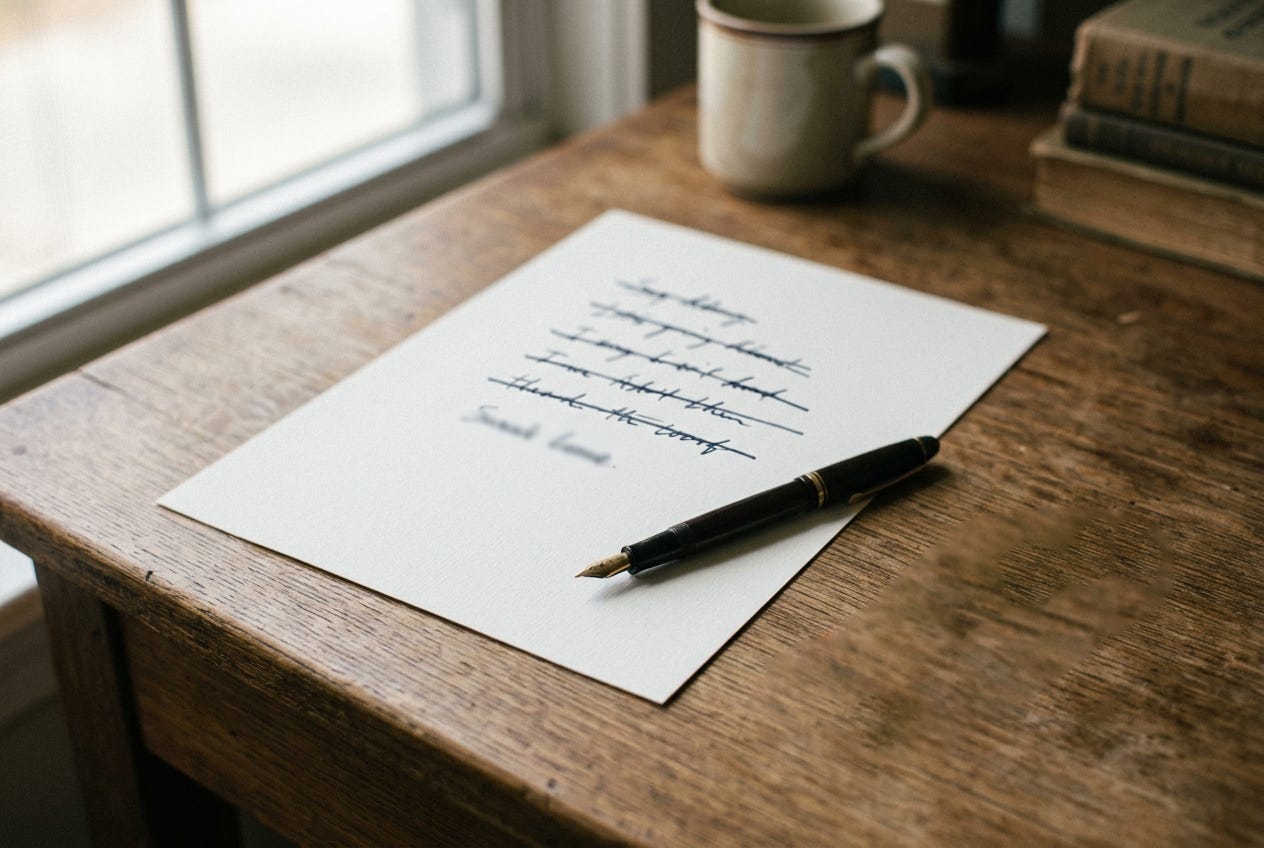
I do imagine the hour before the needle, though. Sitting somewhere with a piece of paper, writing candidates down, crossing them out. Which words will still be mine in fifty years? Which line can I stand next to for that long?
It’s one of the most serious questions a person can ask about words. Arguably more serious than anything we were asked at school.
In Japan, on top of everything else, there is a logistical problem.
Get a tattoo here and, as a starting position, you are banned from most hot springs. The old neighborhood bathhouses will often let you in. The big shiny bathing complexes mostly won’t. Nobody can quite explain where the line is, because the rules were written decades ago, for a different kind of ink on a different kind of person, and the country has never quite found the time to update them.
The whole situation reminds me of an old browser with a full cache. The page has changed. The stored version hasn’t. And everyone agrees that hitting reload is somebody else’s job.
I bring all this up because at some point I realized Grain Patch had wandered into the tattoo’s neighborhood.
Choosing a few words to keep near your body. Words that end up describing you, whether you meant them to or not. The same slow hour with the same piece of paper, writing and crossing out.
What would you wear?
The differences, for the record.
There is no needle. It doesn’t hurt. It lives on your things instead of your skin — the wallet, the phone, the bag — one polite step away from your body. Nobody can see the words. You can enter any hot spring in the country.
And you can change your mind.
That last one matters most, at least to someone built like me. Nobody wears the same shirt every day for forty years. You dress for the weather, and for whoever you’ve turned into that morning. Words move slower than shirts, but they are not stone. A person who keeps living keeps changing, and the words that fit them change too — not daily, but honestly.
And I should be precise here, because the verb matters. What happens isn’t erasing. Nothing gets denied, nothing gets taken back. The old line has simply finished its stretch of the road, and a new one takes the seat. It’s a replacement, the way one season replaces another — nobody accuses autumn of deleting summer.
Keep replacing them, honestly, for years, and what you end up with isn’t decoration anymore. It’s closer to a log. A quiet record of which words you were carrying, and when.
There is one more difference, and for me it might be the decisive one.
A tattoo — whatever the words, however personal — is almost always put into your skin by someone else. A professional, with steady hands and a good reputation. Still: another person. Your most private line makes a stopover in somebody else’s fingers on its way to you.
I’m sure tattoo artists are wonderful people. That isn’t the point. The point is that I couldn’t hand that over. If words are going to live with me, I want to be the one who puts them there.
With the patch, nobody stands in the middle. You write the words yourself and seal them yourself, with your own phone, most likely alone in a room. No appointment, no witness.
The words go from you, to you.
I can hear the objection from the tattooed side, and it’s a good one: the permanence is the point. Words cost something when there’s no way out. Choosing forever is what gives the line its weight.
I respect that. Some words deserve that kind of commitment, and some people are sure enough to make it.
I’m just not one of them. I built the version for the rest of us.
Someone will ask about the bracelet — the silver one from “Invisible Words,” with its one French line. If those words stayed with me for thirty years, why not put them somewhere permanent?
Because even those words were words for a particular stretch of the road. I still think it’s a fine line. I’m also fairly sure that the line that fits me now is a different one. I just haven’t met it yet — or I’ve met it and haven’t noticed, which, with me, is about equally likely.
Skin or leather, needle or none — the part that matters is the same in both places.
Somebody stood still long enough to decide which words were worth keeping. In a world where words mostly rush past, somebody stopped one, looked at it carefully, and said: this one stays with me.
The needle is optional.
The choosing is not.
Muneshige Tanigawa / Kyoto Makotoya
ほとんどタトゥー
言葉を肌に彫っている人たちを、僕は昔から、ある種の敬意まじりの好奇心で眺めてきた。
絵ではなく、言葉のほうだ。前腕に一行。鎖骨の上に、シャツに半分隠れた短いフレーズ。誰かがある時点で「これを一生持っていたい」と決めた言葉たち。
先にひとつ、線を引いておく。マオリをはじめとするポリネシアの人々の伝統的な模様は、僕の目には、まったく別の主題に属している。あれはカウンターでファイルから選ぶものではない。その民族に生まれたことの証であり、肌として纏う文化だ。ここで話すのは、それ以外の話——まっさらな腕と、自由な選択のほうだ。
先に白状しておく。僕は、タトゥーを入れようと考えたことが一度もない。一度も、ちらりとも——たいていの悪いアイデアを少なくともちらりとは検討していた年頃にすら。
主義の問題ではない。自己評価の問題に近い。タトゥーはひとつの選択を一生背負うということで、僕にはその自信がない。柄にも、言葉にも、何に対しても。十七歳のとき僕を完全に支配していた音楽は、いまはだいたい微笑ましい。自分の昔の髪型の写真に微笑むのと、同じ種類の微笑ましさだ。言葉も同じように歳をとる。十七歳にしか刺さらない一行があり、五十歳にならないと分からない一行がある。僕はどうやら、そのあいだを移動しつづけるようにできているらしい。
それでも、針の前の一時間を想像することはある。どこかに座って、紙に候補を書いては消し、書いては消す。五十年後にも自分のものである言葉はどれだ? それだけ長く隣に立っていられる一行はどれだ?
これは、人が言葉について問える中で、いちばん真剣な問いのひとつだと思う。学校で問われたどんな問題より、たぶん真剣だ。
日本には、それに加えて、実務上の問題がある。
この国でタトゥーを入れると、まずスタート地点として、たいていの温泉から締め出される。昔ながらの銭湯は、入れてくれることが多い。ピカピカの大型入浴施設は、まず入れてくれない。この境界線をきちんと説明できる人はいない。ルールは何十年も前に、別の種類の墨と、別の種類の人間のために書かれたもので、この国はそれを更新する時間を、いまだに見つけられずにいる。
この状況はいつも、キャッシュの溜まった古いブラウザを思い出させる。ページは変わった。保存された表示は変わっていない。そしてリロードを押すのは誰か別の人の仕事だと、全員が思っている。
こんな話をしているのは、あるとき、Grain Patchがタトゥーの町内に迷い込んでいたことに気づいたからだ。
体の近くに置く数語を選ぶこと。選んだ言葉が、意図しようとしまいと、その人の記述になってしまうこと。同じ紙を前にした、同じゆっくりした一時間。書いては、消す。
あなたなら、どんな言葉を纏う?
念のため、違いも記録しておく。
針はない。痛くない。肌ではなく持ち物に住む——財布、スマホ、鞄。体から、礼儀正しく一歩だけ離れた場所に。言葉は誰にも見えない。国じゅうの、どの温泉にも入れる。
そして、気が変わってもいい。
僕みたいにできている人間には、最後のやつがいちばん大きい。四十年間、毎日同じシャツを着る人はいない。人は天気に合わせて、そしてその朝の自分が誰になっているかに合わせて、服を選ぶ。言葉はシャツより動きが遅い。でも、石ではない。生きつづける人間は変わりつづけるし、その人に合う言葉も変わっていく——毎日ではなく、正直に。
ここは動詞を正確に選んでおきたい。起きているのは「消す」ではない。何も否定されないし、何も取り消されない。古い一行は、道のりの自分の区間を走り終えただけで、次の一行が席に着く。これは入れ替えだ。季節がひとつ、次の季節に替わるのと同じで——秋が夏を削除したと責める人はいない。
そうやって正直に入れ替えつづけた先に残るのは、もう装飾ではない。ログに近い。いつ、どの言葉を持って歩いていたかの、静かな記録だ。
もうひとつ違いがあって、僕にとってはこれが決定打かもしれない。
タトゥーは——どんな言葉でも、どれほど個人的でも——ほぼ必ず、他人の手で肌に入れられる。プロで、手先が確かで、評判もいい。それでも、他人だ。自分のいちばん私的な一行が、自分に届く途中で、誰かの指先を経由する。
タトゥーアーティストが素晴らしい人たちであることは疑っていない。そこではないのだ。要するに、僕にはそれを委ねられない。言葉がこれから自分と一緒に生きていくのなら、そこに置くのは自分でありたい。
パッチには、あいだに立つ人がいない。言葉は自分で書いて、自分で封じる。自分のスマホで、たぶん部屋にひとりで。予約もいらないし、立会人もいない。
言葉は、自分から、自分へ届く。
彫っている側からの反論が聞こえる気がするし、それはまっとうな反論だ。——消せないことこそが要点なのだ。出口がないからこそ言葉には代償があり、「一生」を選ぶことが、あの一行に重さを与えるのだ、と。
尊重する。そこまでの約束に値する言葉はあるし、それを確信できる人もいる。
僕が、そうではないというだけだ。だから、確信を持てない側の人間のための版を作った。
ブレスレットについて訊かれる気がする。「見えない言葉」に書いた、あのフランス語の一行のことだ。三十年も一緒にいた言葉なら、どこか消えない場所に置けばよかったのに、と。
あの言葉すら、道のりのある区間のための言葉だったからだ。今でも良い一行だと思う。ただ、今の僕に合う一行は、別の言葉だという確信もある。まだ出会っていないだけだ——あるいはもう出会っていて、気づいていないか。僕の場合、どちらの可能性も同じくらいある。
肌でも革でも、針があってもなくても、大事な部分は同じ場所にある。
誰かが立ち止まって、持ちつづける価値のある言葉はどれかを決めた。言葉がほとんど素通りしていくこの世界で、誰かがひとつを捕まえて、よく眺めて、こう言った——これは、僕と一緒に残る。
針は省略できる。
選ぶことは、省略できない。
Muneshige Tanigawa / Kyoto Makotoya