
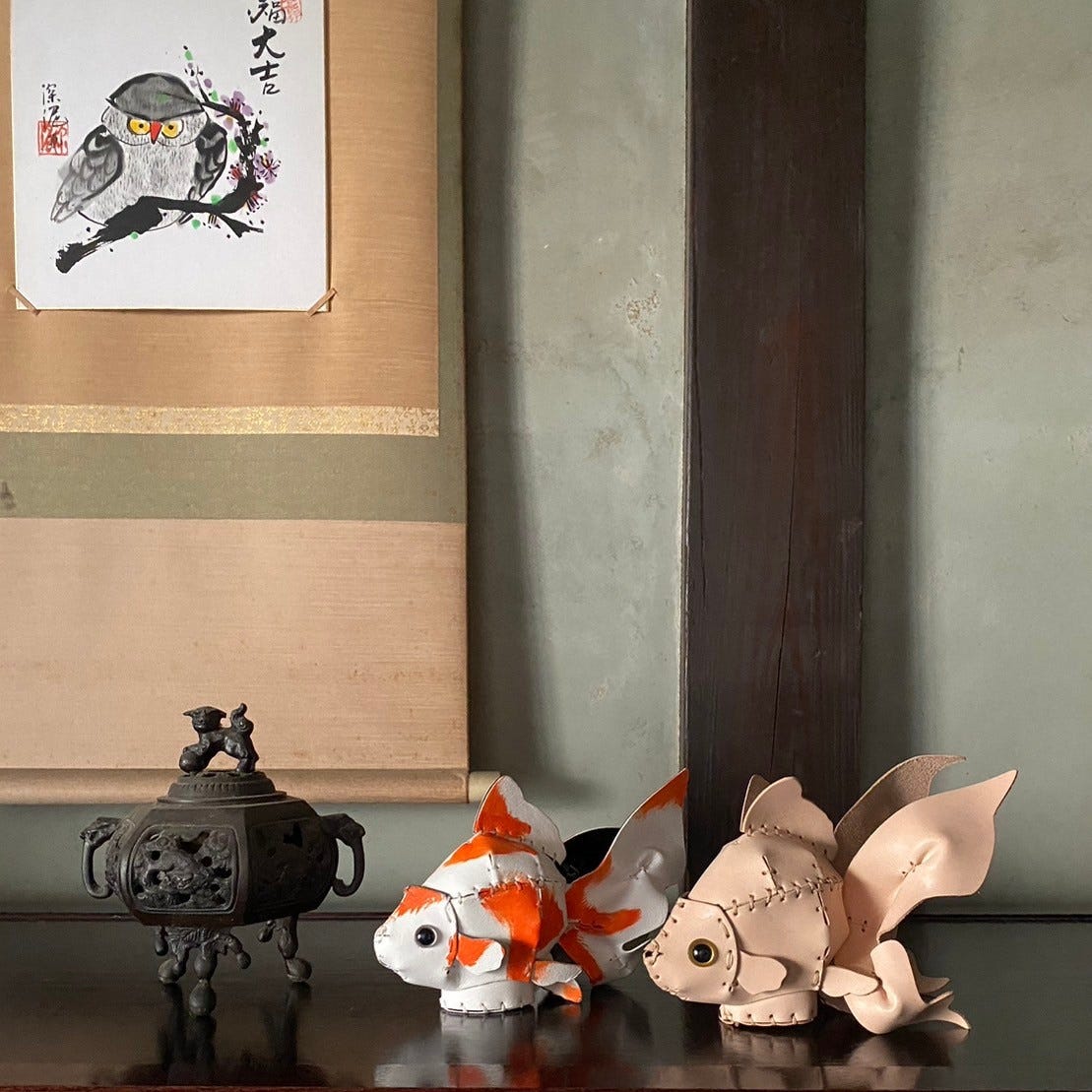
Somewhere in the world right now, a feng shui master is frowning at the position of a doorway. A shaman is reading something in smoke. A woman in a café is turning over a tarot card, a man outside a shrine in Kyoto is unrolling a paper fortune, and a child in a field is counting the leaves on a clover and holding her breath at the fourth.
These people share no religion, no language, no calendar, and in most cases no awareness of each other’s existence. And yet they are all doing the same thing. Every culture on earth, whatever it believes about the large questions, has independently built itself a second, smaller system — a loose folk machinery of luck.
I find the universality interesting. But what I find more interesting is the looseness.
Religions are strict. That’s not a criticism; it’s a job requirement. A faith handles the largest questions there are — what happens after death, how to live, what everything means — and questions that size come with commandments, scriptures, observances. People who believe keep the precepts with real seriousness, and the seriousness fits the stakes.
Then, alongside all of that, wearing no uniform at all, runs the other system.
Luck has no scripture. No one audits your compliance. There are professionals — the feng shui masters, the card readers — but there is no clergy to answer to, and no one in history has ever been excommunicated for walking under a ladder. You may believe in the rabbit’s foot and ignore the black cat. You may knock on wood only in years when things feel shaky. The whole apparatus is opt-in, person by person, dose by dose, and everyone quietly writes their own edition.
A Japanese paper fortune makes the looseness almost official. Draw a bad one, and you tie it to a rack or a tree branch at the shrine and walk away, and by common agreement it stays behind. As belief systems go, this one ships with an undo button.
For a long time I wondered how something so universal could remain so unregulated. I now think the answer is hiding in what luck actually pays out. But before that, a theory of mine.
Here is what I’ve come to believe: luck is proportional to knowledge.
Consider the four-leaf clover. To someone who has never heard the lore, it is not lucky. It is not anything. It is a clover with one extra leaf — a small botanical typo, if they notice it at all. The luck is not in the plant. The luck is in the knowing.
Which leads somewhere I like: a person who carries a large stock of luck trivia will simply encounter more luck. Same streets, same fields, same weather. But where one person sees a clover, a bird, a number, a coin on the pavement, the person with the fuller dictionary keeps reading small good omens all day long. The world is scattered with these sentences. They’re just written in a script you have to have learned.
Luck, in other words, is a kind of literacy. Nobody is born reading it. And the more of it you can read, the luckier the world you happen to live in — not because the world changed, but because your edition of it has more footnotes.
And what does the reading actually pay?
Not salvation. Not wealth, whatever the goldfish implies. What you receive, on finding the four-leaf clover, is a small joy. What you receive from the amulet in your bag, from the animal on your shelf, is a small reassurance. That’s the whole payout. A culture that spans the entire planet, sustained for millennia, running entirely on slightly happier and slightly calmer.
And I think that’s exactly why it never needed commandments. You don’t build an enforcement arm to protect a little joy. The stakes of religion are enormous, so religion is strict. The stakes of luck are a warm few seconds — and a warm few seconds requires nothing from you, which is precisely why everyone, everywhere, across every border and every creed, has room in their life for it.
It might be the only belief system humanity ever built that has no fine print.
The animals from our workshop are hired from this system. They promise nothing; I’d be uneasy if they did.
But consider how a day actually begins. Nearly all of us live inside a routine — same hour, same shoes, same train — and the routine starts, officially, the moment the front door opens.
Now suppose a small animal stands at that door. One said to be lucky. One, more to the point, that you stitched together yourself. It sees you off in the morning; it’s there again when you come home. Nothing has been promised — by the animal, by the lore, by me. And still, if it catches your eye while you’re pulling on your shoes, I believe you step out a shade more positive than you otherwise would have. I believe it, and I hope it — and hope is roughly the fuel this whole system has been running on all along.
Which is why I’d rather our animals didn’t spend their careers on a display shelf. Give them a post in the entryway. In the living room. Beside the reading light at your bedside. The places a routine actually passes through — where a small dividend can be paid out daily, at the door, in the last second before the day begins.
Muneshige Tanigawa / Kyoto Makotoya
運の読み方
いまこの瞬間も、世界のどこかで、風水師が扉の位置に眉をひそめている。シャーマンが煙の中に何かを読んでいる。カフェの女性がタロットカードを一枚めくり、京都の神社の前では男がおみくじを開き、野原では子どもがクローバーの葉を数えて、四枚目のところで息を止めている。
この人たちは、宗教も、言語も、暦も共有していない。ほとんどの場合、お互いの存在すら知らない。それなのに、全員が同じことをしている。地上のすべての文化が、大きな問いについて何を信じていようと、それとは別に、もうひとつの小さな仕組みを独自に組み上げてきた——運をめぐる、ゆるい民間の機構を。
この普遍性は面白い。でも、もっと面白いのは、そのゆるさのほうだ。
宗教は厳格だ。批判ではない。職務要件である。信仰が扱うのは、存在しうる限り最大の問いだ——死んだらどうなるのか、どう生きるべきか、すべては何を意味するのか。そのサイズの問いには、戒律と、聖典と、勤めがついてくる。信じる人たちは本当の真剣さで戒律を守っていて、その真剣さは、賭け金の大きさに釣り合っている。
そのすぐ隣を、制服も着ずに、もうひとつの仕組みが走っている。
運には聖典がない。遵守を監査される事もない。専門家はいる——風水師も、カードの読み手も。でも従うべき教団はないし、梯子の下をくぐって破門された人間は、歴史上ひとりもいない。ウサギの足は信じるが黒猫は無視する、というのもありだ。調子の悪い年にだけ木を叩く、というのもありだ。この装置の全体がオプトイン式で、ひとりずつ、さじ加減ひとつずつ、全員が静かに自分専用の版を編集している。
おみくじは、このゆるさをほとんど公式のものにしている。凶を引いたら、境内の枝や結び所にくくりつけて、歩き去ればいい。そして共通の了解として、凶はそこに残ることになっている。信仰の仕組みとしては、アンドゥボタンつきで出荷されているわけだ。
これほど普遍的なものが、なぜこれほど無規制のままでいられるのか、長いこと不思議だった。いまは、答えは運が実際に支払うものの中に隠れていると思っている。ただその前に、僕の持論をひとつ。
僕はこう考えるようになった。運は、知識量に比例する。
四つ葉のクローバーを考えてみてほしい。あの言い伝えを聞いたことのない人にとって、あれは幸運ではない。何ものでもない。葉が一枚多いクローバー——気づいたとしても、植物界の小さな誤植だ。運は、草のほうに入っていない。知っていることのほうに入っている。
ここから、僕の好きな場所に話が進む。運のトリビアをたくさん持ち歩いている人は、単純に、より多くの運に遭遇する。同じ道、同じ野原、同じ天気。でも、ある人にはただのクローバーで、鳥で、数字で、道端のコインであるところで、辞書の厚い人は一日中、小さな吉兆を読みつづけている。世界にはこの種の文章がばらまかれている。ただし、習った人にしか読めない文字で書かれている。
つまり運とは、一種の読み書き能力なのだ。生まれつき読める人はいない。そして多く読めるようになるほど、住んでいる世界は運の良いものになっていく——世界が変わったからではなく、あなたの版に、脚注が増えたからだ。
では、読めるようになると、何が支払われるのか。
救済ではない。金魚が何を匂わせようと、財産でもない。四つ葉を見つけたときに受け取るのは、ちょっとの嬉しさだ。鞄の中のお守りから、棚の上の動物から受け取るのは、ちょっとの安心感だ。支払いはそれで全部。地球全体にまたがって、何千年も維持されてきた文化が、少し嬉しいと少し落ち着くだけで、完全に回っている。
そして、だからこそ戒律が要らなかったのだと思う。ちょっとの嬉しさを守るために、執行機関を作る者はいない。宗教の賭け金は途方もなく大きい。だから宗教は厳格だ。運の賭け金は、あたたかい数秒だ。あたたかい数秒は、あなたに何も要求しない。そしてまさにそれゆえに、あらゆる国境とあらゆる信条の向こうで、全員の生活に、これの入る隙間があるのだ。
人類が作った信仰の仕組みのうち、細かい約款が一切ついていないのは、たぶんこれだけだと思う。
うちの工房の動物たちは、この仕組みから採用されている。彼らは何も約束しない。約束されたら、僕のほうが落ち着かない。
ただ、一日が実際にどう始まるかを、考えてみてほしい。僕らはほとんど全員、ルーティーンの中で暮らしている。同じ時刻、同じ靴、同じ電車。そしてルーティーンは、玄関の扉が開いた瞬間に、公式に始まる。
その玄関先に、小さな動物が立っているとする。縁起が良いとされている動物で、なにより、あなたが自分の手で縫い上げた動物だ。朝はあなたを見送り、帰ってくれば、また迎える。何も約束されていない——動物からも、言い伝えからも、僕からも。それでも、靴を履いているときにそれが目に入ったら、あなたはきっと、ほんの少しだけポジティブに、その日を始められるのではないかと思う。そう思うし、そうであってほしいと願っている。そして願いというのは、そもそもこの仕組み全体が、ずっと昔から燃料にしてきたものだ。
だから僕は、うちの動物たちに、飾り棚の上でキャリアを終えてほしくないのだ。玄関に持ち場を与えてやってほしい。リビングに。ベッドの枕元の、リーディングライトの隣に。ルーティーンが実際に通り過ぎる場所に——小さな配当が毎日支払われる場所に。扉の前で、一日が始まる直前の、最後の一秒に。
Muneshige Tanigawa / Kyoto Makotoya