
Six years ago, I began teaching product design at Kyoto City University of Arts. That’s where this started — not in a workshop, not with a piece of leather in my hands, but in a classroom, watching students work.
What I noticed, slowly, was a kind of stillness that wasn’t concentration. Students would sit in front of their screens, and stop. Not thinking. Stopped. The cursor blinking. The project open. Nothing moving.
I’ve come to understand what was happening. They were trying to design the process itself — to plan each step before taking it, to make the development look correct before it had begun. And because they couldn’t make the process look right in advance, they couldn’t start.
This is not a failure of intelligence. It’s something more specific than that.
When I was a student at Central Saint Martins in London, design worked differently — at least for me. Research meant going to the library, pulling books from shelves, turning pages until something caught. Understanding a fabric meant touching it, folding it, holding it up to light. And when an idea started forming in my head, the only way to know whether it was real was to partially make it — cut something, stitch a section together, hold it against a body. The hands were part of the thinking.
What I learned then is that development leaves traces. You can see, in the final work, where someone struggled, where they corrected, where something unexpected became the answer. Those traces are not imperfections. They’re evidence that the work was actually made — that a person was present during its creation, responding to what the material was doing.
I look for those traces in my students’ work. They are how I know whether someone has made something, or produced something.
The problem with designing the process in advance is this: making is fundamentally trial and error. Not as a method you choose, but as the nature of the thing. Materials behave unexpectedly. Proportions feel different in reality than they do on screen. What seemed resolved becomes a question again the moment you touch it.
When you are afraid of error, you cannot try. And when you cannot try, nothing gets made.
I don’t think this is the students’ fault. The tools available to them are very good at showing finished things. Searches return polished results. References are always resolved, always complete. There are very few places left where you are allowed to encounter something in its unfinished state, where the process is still visible, where error is part of the experience.
I wanted to make one of those places.
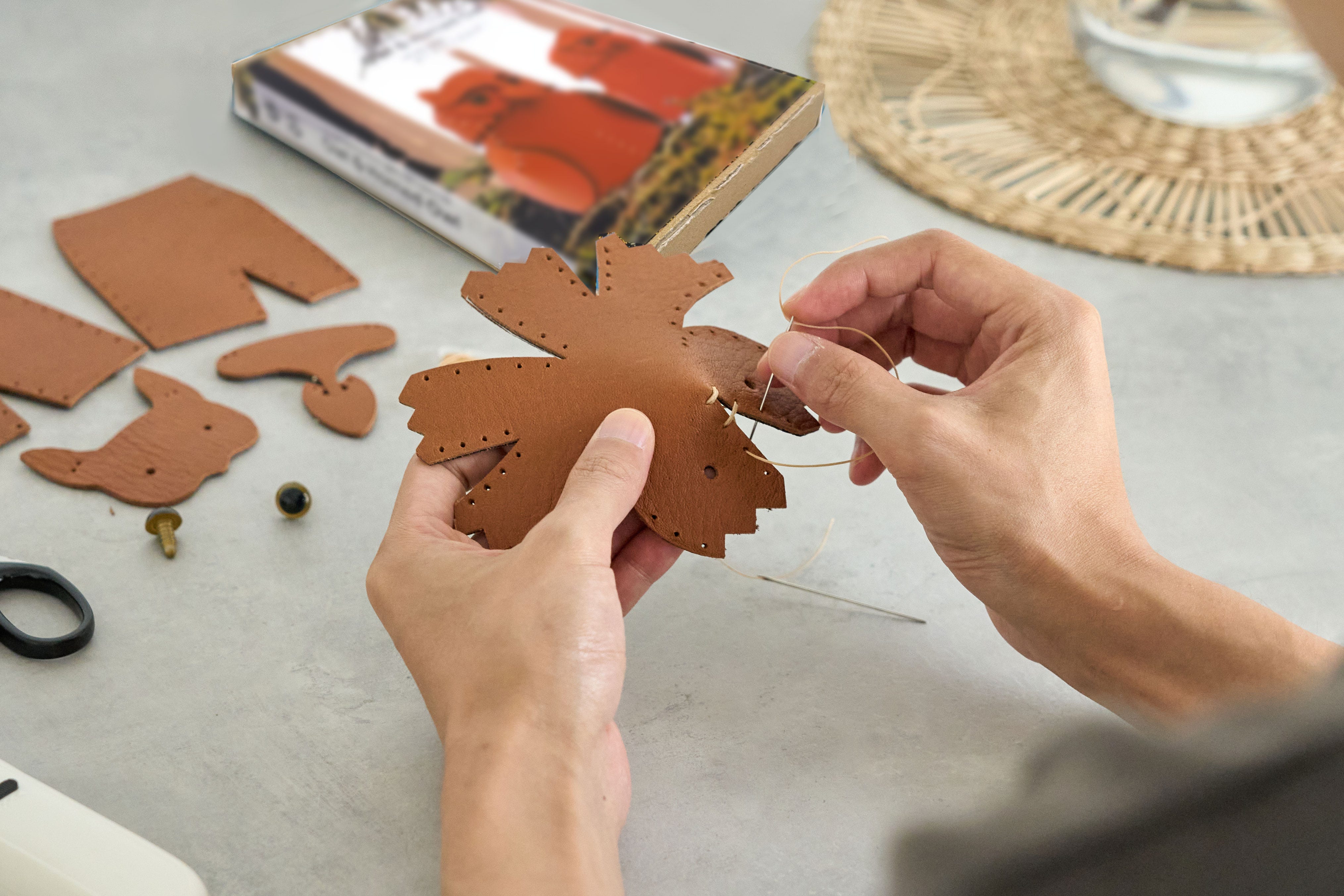
That’s what Kyoto Makotoya is, at its origin. Not a craft brand, exactly. More like an argument — a small, quiet one — that the time your hands spend figuring something out is worth something. That you don’t need to know how it will look before you begin. That the finished object will carry the evidence of how it came to be, and that this is not a flaw.
The kit is a beginning, not an instruction. The stitching can be redone. The form takes shape through the doing. Whatever it ends up looking like, it will have been made — and that is the only thing that was ever required.
*Muneshige Tanigawa / Kyoto Makotoya*
6年前、京都市立芸術大学でプロダクトデザインを教えはじめた。
革模型キットの始まりは、そこにある。
工房でも、革を手にした瞬間でもなく、教室の中で、学生たちを見ていた時間から。
気づいたのは、少しずつだった。
学生たちが、画面の前で止まっている。
集中しているわけではなく、ただ、止まっている。
カーソルが点滅したまま。プロジェクトは開かれたまま。何も動かない。
彼らが何をしようとしていたか、今はわかる。
過程そのものをデザインしようとしていた。
最初の一手を踏み出す前に、その一手が正しく見えるように準備しようとしていた。
でも、過程を正しく見せることができないから、始められない。
これは、能力の問題ではない。もっと具体的な何かだ。
僕がセントマーチンに通っていた頃、デザインは違う動き方をしていた。
少なくとも、僕にとっては。
リサーチは図書館へ行くことで、棚から本を引き出して、ページをめくり続けることだった。
素材を理解するには、触れて、折り曲げて、光に透かして確かめた。
頭の中にあるアイデアが本物かどうかを知るには、部分的に作るしかなかった。
切って、縫って、身体に当ててみて。
手が、思考の一部だった。
あの頃に学んだのは、デベロップメントには痕跡が残るということだ。
最終的な作品の中に、どこで苦労したか、どこで修正したか、
予期しないことが答えになった瞬間が、見えることがある。
それは欠点ではない。
作品が本当に作られた証拠だ。
制作の途中で、誰かがそこにいた証拠。
僕が学生の作品の中に探すのは、その痕跡だ。
それがあるかどうかで、誰かが「作った」か「産出した」かがわかる。
過程をあらかじめデザインしようとすることの問題は、こうだ。
ものづくりは、本質的にトライ&エラーだ。
選択する方法としてではなく、そもそもそういうものとして。
素材は予期しない動きをする。
画面の中でちょうど良く見えた比率が、現実では違って感じられる。
解決したと思っていたことが、触れた瞬間に、また問いになる。
エラーを恐れていると、トライできない。
トライできないと、何も生まれない。
これは学生たちのせいではないと思っている。
彼らが使えるツールは、完成したものを見せることがとても得意だ。
検索すれば、整った結果が返ってくる。
参照できるものはいつも解決済みで、完成している。
未完成のものに触れる場所、過程がまだ見えている場所、
エラーが体験の一部として残っている場所が、ほとんどなくなっている。
そういう場所を、ひとつ作りたかった。
それが、京都諒屋の始まりだ。
クラフトブランドというより、小さな静かな主張として。
手が何かを試行錯誤に費やす時間には、価値がある。
始める前に、どうなるかを知っている必要はない。
完成したものには、どうやってそこに辿り着いたかの証拠が残る。
そしてそれは、欠点ではない。
キットは説明書ではなく、始まりだ。
縫い直してもいい。形は、作ることを通じて生まれてくる。
どんな形になっても、それは作られたことになる。
それだけが、最初から求められていたことだった。